
Ditch Maintenance: What Rural Residents Should Know
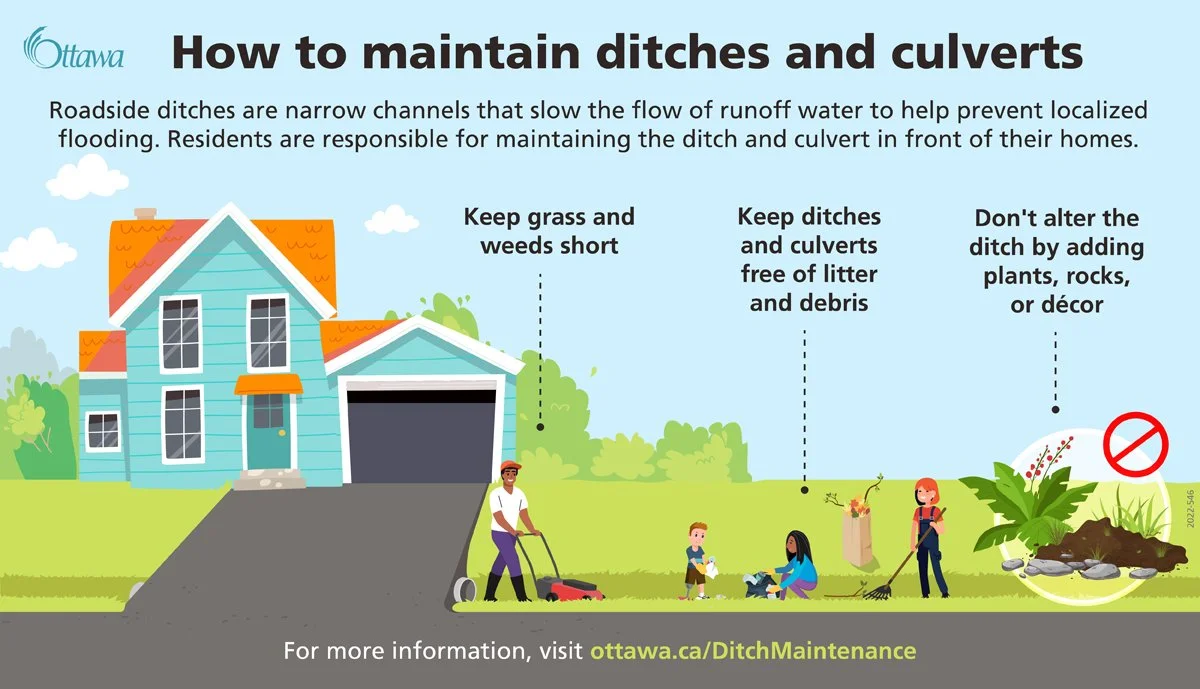
In Ward 21, ditches are part of everyday rural life. Most residents know what they are and why they matter, but it is still important to understand how maintenance responsibilities are shared and why changes to a ditch can have impacts beyond one property.
Ditches help move rainwater and spring melt away from roads, driveways, homes, farms, and low-lying areas. They also help reduce erosion, protect road shoulders, and manage water before it reaches downstream drainage systems. Some temporary ponding is normal, especially after heavy rain, during spring melt, or in flatter areas where water drains more slowly.
The most important thing for residents to know is that ditches are part of a connected system. A blocked culvert, dumped yard waste, or an unauthorized alteration can affect neighbours, road conditions, and nearby properties.
Who is responsible for what
Ditch maintenance is a shared responsibility between the City and property owners. The exact responsibilities depend on where the ditch is located.
In subdivisions, property owners are generally responsible for routine culvert maintenance, removing debris, maintaining boulevard areas, and replacing deteriorated or damaged culverts. The City is responsible for re-establishing the original grade and slope as part of larger maintenance programs, as well as flushing identified culverts through those programs.
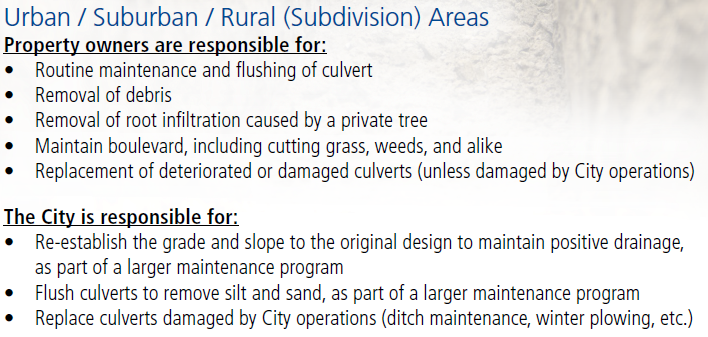
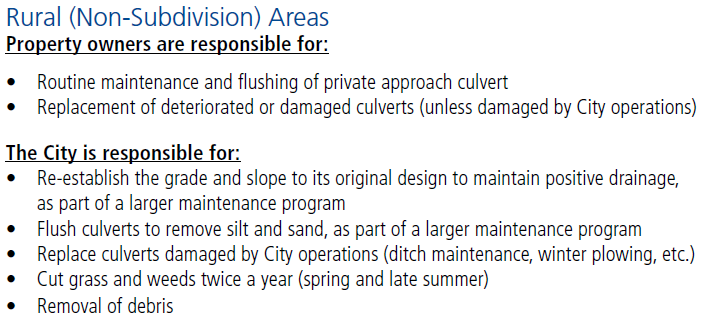
In rural areas outside subdivisions, the City has additional responsibilities because of safety concerns along rural roadsides. Property owners are generally responsible for routine maintenance and flushing of private approach culverts, as well as replacing deteriorated or damaged culverts. The City is generally responsible for flushing cross culverts, removing debris, restoring grade and slope as part of larger maintenance work, flushing culverts to remove silt and sand through those programs, and cutting grass and weeds twice per year.
What the City is Doing to Improve Ditching and Drainage
I also want to be clear that this is not just about reminding residents of their responsibilities. The City has responsibilities too, and rural residents have been very clear that we need to do a better job managing ditching, drainage, culverts, and roadside water issues.
Ottawa has roughly 5,400 kilometres of roadside ditches, and this infrastructure is essential for protecting farmland, preventing flooding, maintaining safe roads, and managing water across rural communities. Through the Rural Summit and the 2026 budget process, the City has increased investment in ditching and drainage, with the budget expected to reach $5.6 million by 2027. The 2026 Budget also included $3.6 million specifically to maintain rural roadside ditches.
Just as importantly, the City is changing how this work is managed. The 2026 ditch work plan includes additional staffing, contracted service support, equipment procurement, proactive maintenance planning, and better coordination across departments. The City has also identified rural leads in each department to help ensure rural issues are considered in planning, operations, and decision-making.
This matters because ditching and drainage cannot only be handled after water is already backing up. 311 service requests will always remain important, but we need to keep moving toward a more proactive system that identifies known problem areas earlier, plans maintenance more strategically, and treats rural drainage as the core infrastructure issue it is.
There is still work to do, and we are increasing resources, improving coordination, and pulling up our socks so the City is better positioned to manage its own responsibilities.
How ditch issues are prioritized
The City prioritizes ditch maintenance based on safety and drainage impacts.
Priority A issues involve blocked drainage that is causing flooding and creating an immediate safety hazard. These are targeted for completion within four hours.
Priority B issues involve partially blocked drainage, causing intermittent water backups that do not create an immediate safety hazard but could affect infrastructure over time. These are targeted for completion within 30 days.
Priority C issues involve drainage system deterioration with no immediate safety hazard. These are added to the ditch maintenance list and completed as soon as practicable.
Please do not alter a ditch without approval
Residents should not change the slope, location, appearance, or function of a ditch without approval. Even a small change can alter how water moves and may cause flooding, erosion, or drainage problems for neighbours or nearby roads.
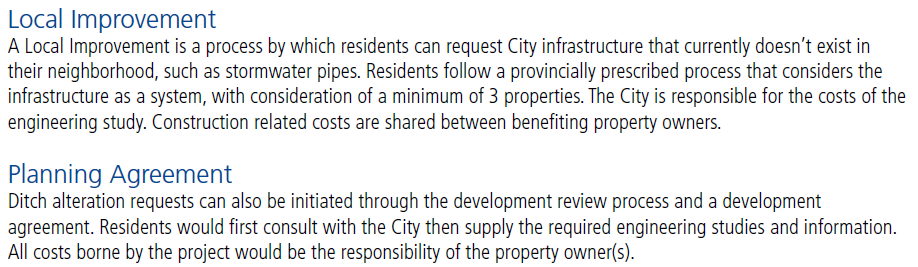
Ditch alterations must go through an approved process, such as a Local Improvement request or a Planning Agreement. These processes ensure that drainage impacts are properly reviewed and that changes do not create new problems elsewhere in the system.
How residents can help
Residents can help keep the drainage system working by keeping ditches clear, avoiding the dumping of leaves, grass clippings, soil, branches, or debris, and reporting concerns early through 311.
If you notice blocked drainage, unusual pooling, flooding, erosion, a blocked culvert, or a ditch that appears to have been altered, please report it to the City. It is always better to flag a concern early before it becomes a larger and more expensive problem.
Ditches may be easy to overlook, but in a rural ward like ours, they are essential infrastructure. Keeping them clear, respecting the approval process, and reporting issues early helps protect roads, properties, and our wider community.
To report a ditch concern, submit an online service request at Ottawa.ca/311 or call 3-1-1.