
Proposed Urban Boundary Expansion at Fernbank Rd & Flewellyn Rd (West of Stittsville) - What you need to know
🎧 I discussed this with CTV News Ottawa and CFRA’s Morning Rush, you can listen below:
Claridge Homes has submitted an application to expand Ottawa’s urban boundary onto rural land in Ward 21 at 6435 Fernbank Road and 6437 Flewellyn Road, west of Stittsville. If approved, it could set the stage for about 2,391 homes on roughly 112 hectares of land that is currently designated Rural Countryside.
Let me be clear: I do not support this proposal, and Stittsville Councillor Glen Gower does not support it either.
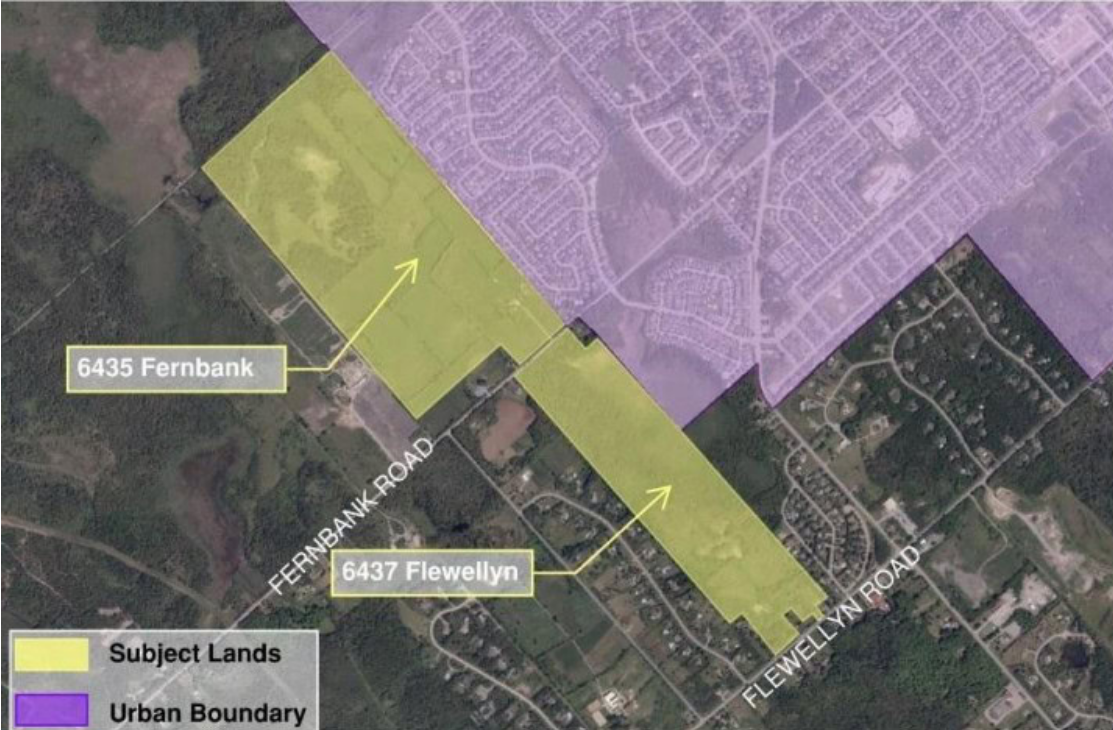
^ Lands highlighted in yellow are proposed for development
Ottawa does need more housing but where we build matters. I support building homes in places where services and infrastructure already exist and where growth can be supported efficiently. This application does the opposite. It pushes growth outward onto Ward 21 agricultural land, beside existing rural and estate lot homes, and near sensitive natural features including wetland and forest areas.
The City is already taking serious steps to enable urban intensification, precisely so we can add housing without constantly expanding outward. Council has just approved the new Zoning By-law that is designed to remove barriers and make it easier to add gentle density in neighbourhoods, support more housing options, and provide clearer permissions for mid-rise and high-rise development in areas close to transit, with more flexible parking rules that reflect how people actually live. This is the direction we should be moving in: using the tools we control to build more homes within the urban area, not sacrificing rural land and then asking taxpayers to fund the long-term servicing bill.
The City has also updated its growth projections to help plan for the future, including an updated Growth Management Strategy that is expected to come forward in April. Those projections matter because Ottawa is expected to grow significantly, with provincial projections showing Ottawa rising from about 1.15 million people in 2024 to about 1.68 million by 2051. I support planning for that growth, but planning is the key word. Growth projections should lead to smart, coordinated decisions about housing, roads, water, sewer, transit, and community services. They should not be used as a justification to push development into rural areas simply to build more homes fast.
That is the real risk here. Thousands of new homes in a fringe location means more pressure on intersections, more traffic on roads that already carry heavy commuter volumes, and more strain on the day-to-day services residents rely on, including road maintenance, snow clearing, and emergency response. Ward 21 has already experienced more growth pressure than any other rural ward, and residents can see how quickly infrastructure and services can fall behind when growth is not properly sequenced.
💬 How you can weigh in (it matters):
This application is not approved. City staff are reviewing it, with a target committee date of May 20, 2026.
If you share these concerns, you may email the City planner Colette Gorni (email: Colette.Gorni@ottawa.ca) and include “Written Objection - Official Plan Amendment D01-01-26-0001” in the subject line. The initial comment deadline is March 11, 2026.
(If you want to preserve your ability to participate later in the process, getting a written comment on record is a good idea.)
I will continue to oppose this boundary expansion and keep residents updated as it moves through the public process.