
Ottawa Recycling Collection Changes
I would like to share this information for clarity, as a number of residents have reached out to our office with questions about a change to Ottawa’s recycling program. The key point is this: your day to day recycling routine is not changing. What is changing is who runs the program behind the scenes, and the good news is that more items will now be accepted in recycling.
As of January 1, 2026, residential blue and black bin recycling is no longer run by the City of Ottawa. Like every municipality in Ontario, Ottawa has moved into the Province’s new Blue Box recycling system. Under this approach, the companies that supply packaging and paper are responsible for funding and managing recycling collection and processing.
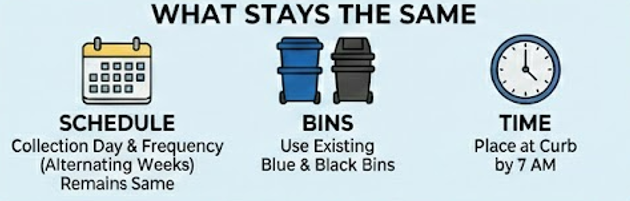
For residents, the curbside routine remains familiar. Your collection day remains the same. Blue and black bins remain separate, and materials should still be at the curb by 7:00 am on collection day. You can continue using your existing bins, and the City collection calendar tools remain available for scheduling. What you may notice is a different truck collecting your recycling, or collection occurring at a different time of day, but your set out routine stays the same.
Two practical things have changed, effective January 1.
First, recycling questions and service issues are now handled through the Province’s program and its local contractor. If you experience a missed pickup, need help with a recycling issue, or have questions about what goes where, contact Miller Waste by email at area2@millerwaste.ca or by phone at 1 (888) 852-2374.
Second, the list of accepted recyclable items is expanding and being standardized across Ontario. This is the change residents will appreciate most, and it should make recycling clearer and easier over time.
Ottawa remains a two bin system: fibre goes in the black bin, containers go in the blue bin.
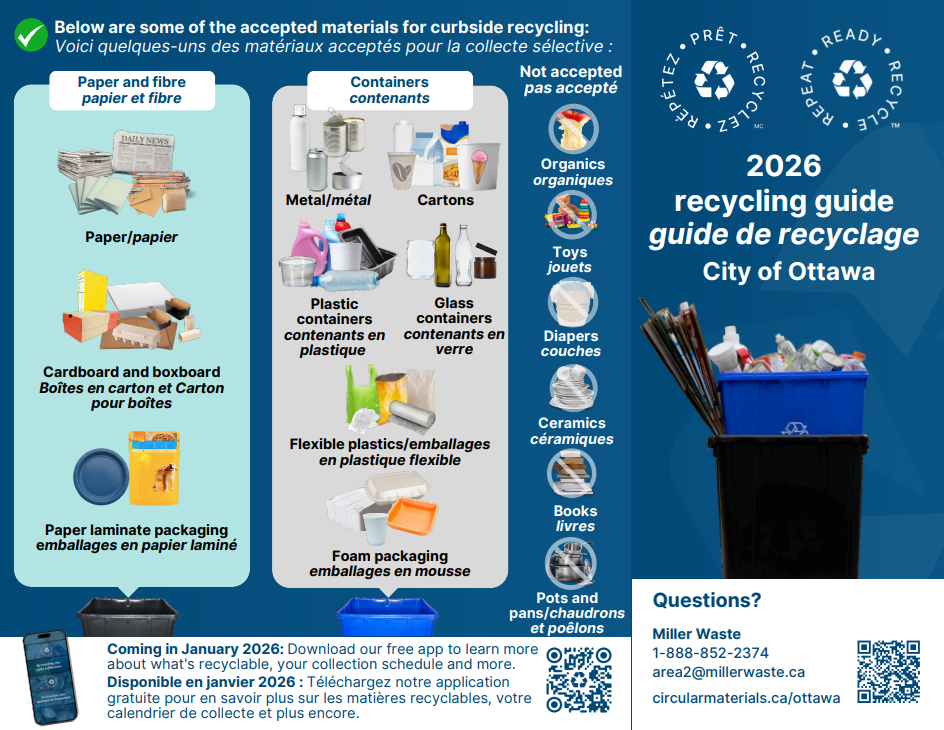
Black bin recycling (fibre) includes paper laminate packaging and other fibrous and paper material. Examples include cardboard boxes (including pizza boxes and shipping boxes), boxboard (like cereal and tissue boxes and paper towel rolls), paper bags and printed paper (newspapers, flyers, magazines, office paper, envelopes, greeting cards and more), and paper laminate packaging such as pet food bags, food service paper bags, and plates. Cardboard and boxboard should be flattened when possible. Shredded paper is accepted if placed in a tied clear plastic bag.
Blue bin recycling (containers) includes paper laminate containers, cartons, foam packaging, flexible plastic packaging, as well as glass, metal, and plastic containers.
Paper laminate containers include items like spiral cans, cookie dough packages, ice cream containers, and hot and cold disposable beverage cups. These should be empty and free from food residue, and lids should be removed.
Cartons include juice and milk cartons, coffee creamers, and soup, broth, sauce, or similar cartons. These should be empty and free from residue, and lids can stay on.
Foam packaging includes takeout containers, cups, plates, bowls, and foam trays. These should be empty and free from residue, and any film wrap and absorbent pads should be removed where applicable.
Flexible plastic packaging includes bags used for dry cleaning, bread, newspapers and flyers; overwrap (like the wrap around paper towels, toilet paper, or beverage cases); coffee bags or deli pouches; chip bags; bubble wrap; snack wrappers; cereal liner bags; and plastic gift bags. These should be empty and free from residue.
Plastic containers include hard plastic bottles and jugs (like detergent jugs and shampoo bottles), as well as a wide range of plastic tubs, trays, cups, lids, and black plastic containers. Toothpaste and deodorant tubes are also included, along with some small plastic packaging like blister packs and plant pots. In general, set items out empty and free of residue, and keep lids on plastic containers.
Metal and glass are also included. Metal containers include food cans, metal lids, and tins (like cookie tins), and aluminum foil and foil trays are accepted when empty, with foil balled up. Glass includes clear and coloured jars and bottles; these should be empty and free from residue, with lids off.
For the most up to date list and local details, residents should visit the Circular Materials website.
Finally, I want to address a question I have heard from many residents. While responsibility for recycling has shifted away from the City, this does not automatically result in a reduction to your property tax bill. What has changed is where those dollars are applied. Funds that were previously used to pay for recycling services are now being used to offset cost increases in other parts of the City’s solid waste system, including garbage collection.
Property taxes are set through the City’s annual budget process, and savings or cost shifts in one program are often absorbed by pressures elsewhere. In this case, the change helped manage rising costs beyond what was originally budgeted, rather than creating a direct, immediate reduction on individual tax bills.
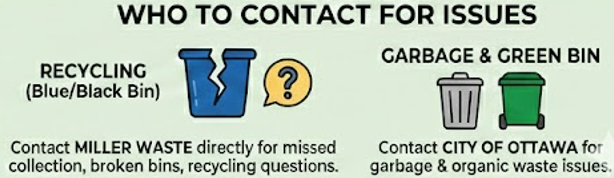
If you have any recycling issues, please contact Miller Waste using the information above, and as always, my office is happy to help residents find the right information when changes like this occur.